
There are several types of vertigo that can affect a person, but one of the most common is called BPPV or Benign Paroxysmal Positional Vertigo. BPPV is a form of vertigo that affects your semicircular canals or the balance mechanism inside of your skull. This type of vertigo can come on very suddenly, and often without cause though it is also linked with concussions or other types of injury to the head and neck.
The semicircular canals are three loops that look a bit like a roller coaster and are positioned in the three cardinal planes of movement sort of like an X,Y,Z graph in physics depicting 3D movement. In each canal there is fluid that moves around and little hairs inside of each canal that are stimulated when you move your head so you know if you are bending your head down, rotating side to side or tilting your head to the side. When working properly you wouldn’t even recognize that your brain is processing this movement and continue on with your life unaware.
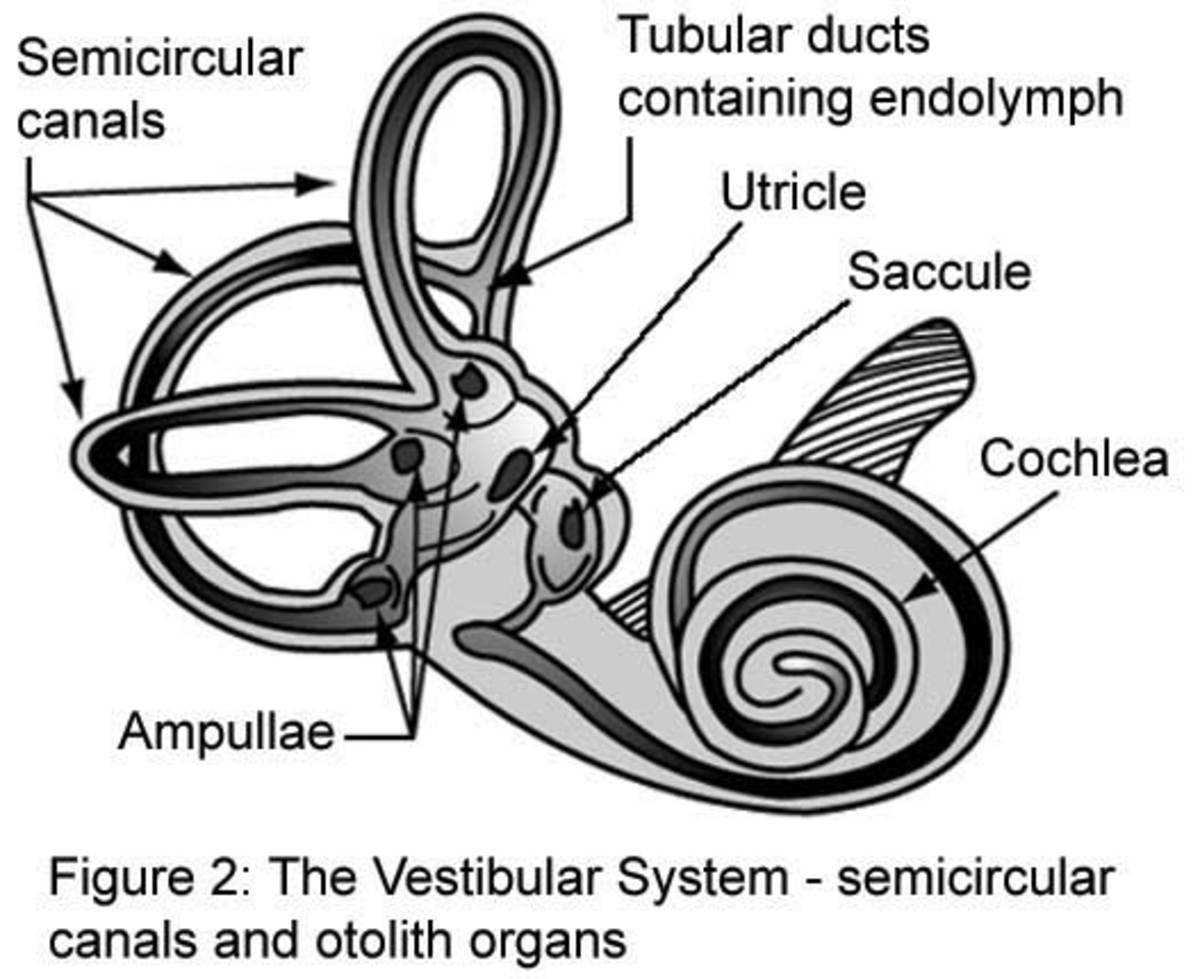
BPPV is what happens when little crystals get loose and get lodged in the canal causing an OVERstimulation of the little hairs. This is when you get that characteristic spinning feeling. In classic cases of BPPV you will get the vertigo/spinning sensation when going to a certain side. Most often people notice it when lying in bed and they roll over to one side and suddenly it feels like the room is rotating out of control. This can be likened to a night of too much drinking in University and trying to go to sleep when you have the spins. BPPV feels similar except you don’t get the night of fun preceding it. The hallmark symptom of BPPV is vertigo, with one position of your head (lying on your left side) and when you put your head in the opposite position you do not get an equal response of spinning or any at all. BPPV or any type of vertigo can cause extreme nausea and in bad cases vomiting from the extreme sensation.
Although BPPV can be linked to head injuries like a concussion, it is more often than not spontaneous, and without warning. The symptoms of spinning usually dissipate as quickly as they come on, lasting no more than 30 seconds or so from when you put your head into the offending position. Patients frequently present stating that they cannot lie on a particular side or have been sleeping upright to avoid the symptoms. The fix for this condition is a simple maneuver called the Epley’s Maneuver. Once confirming that a patient does have BPPV and specifically which side is affected the treatment can be quite quick and very effective.
The Epley’s maneuver is something that I perform in my office, and can be done up to three times in a visit for maximum effectiveness. It is a simple exercise of a patient lying down and rotating to get the crystals within the semicircular canals to float out of the inner ear. Once this is successful the dizziness that a patient feels in those specific positions will go away very quickly. There are other causes of vertigo, but this is one of the most common and easily treated. If you are experiencing a new onset of vertigo without a cause, then you should be getting it checked by a knowledgeable professional.
 Dr. Adam Wade